






 English
 日本語
日本語 한국어
한국어 français
 Deutsch
 Español
 italiano
 العربية
 ไทย
ไทย tiếng việt
 Indonesia
Rimind PS™ Product Upgrade | Why Low Viscosity Matters for Oil-Dispersible PS
Phosphatidylserine (PS), a widely used functional ingredient in the brain-health category, continues to see expanding applications. In 2025, softgels accounted for more than 50% of PS finished products in China. Premium oil-based brain-health formats have become a growth driver in the functional food market. Softgels and oil-based beverages continue to gain market attention for their efficient absorption, clean formulation profiles, and premium positioning.
Are Dosage-Form Challenges Holding Back Premium Products? Physical Mixing Alone Does Not Address the Root Cause
When conventional phosphatidylserine (PS) is used in oil-based formulations such as softgels, stringent requirements are placed on PS particle size, processing techniques, and production equipment. These factors can become key bottlenecks in commercial-scale manufacturing.
To support softgels and oil-based beverages, the industry commonly mills and sieves PS to 100 mesh and repeatedly processes it through colloid mills or ball mills. These steps are not only complex, but can also increase the risk of an elevated peroxide value. At the same time, oil-based systems may exhibit high viscosity and poor flowability, making them prone to phase separation during scale-up and storage. The result can be reduced finished-product stability, a coarse appearance, lower production yield, and difficulty meeting premium product quality standards.
Application Upgrade | Rimind PS™ Oil-Dispersible Powder: A Purpose-Built Solution for Oil-Based Formats
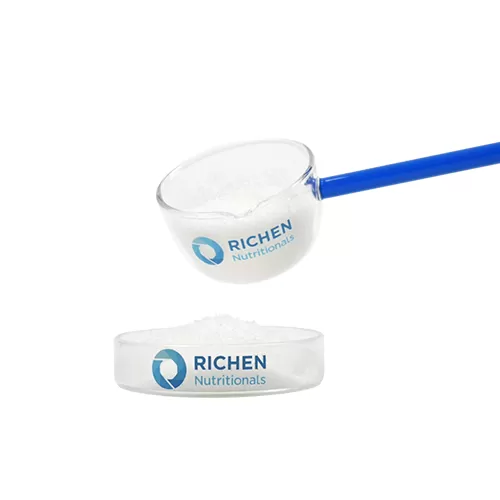
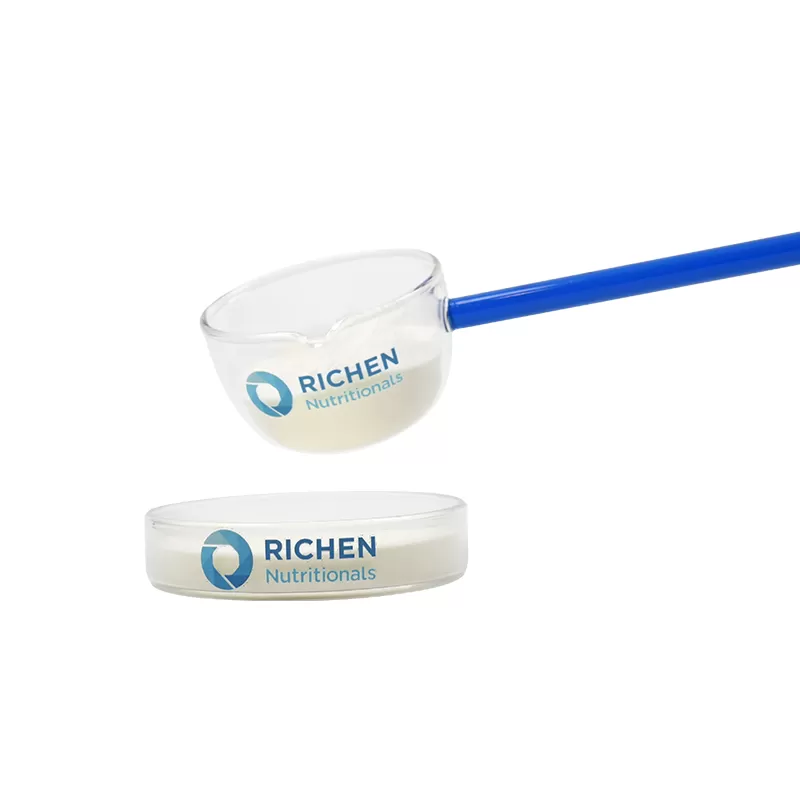
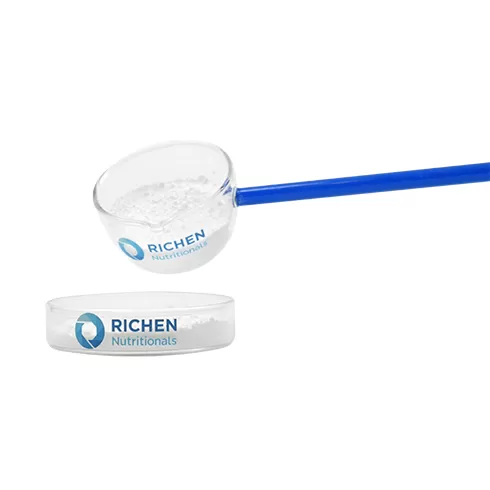
Rimind PS™ Phosphatidylserine (Model: Oil Dispersion) is an upgraded PS ingredient specifically developed for softgels and oil-based liquid beverages. It is inherently compatible with oil systems and substantially improves flowability while reducing viscosity. By addressing key challenges such as filling difficulties and phase separation during standing, it delivers a comprehensive upgrade in flowability, viscosity control, processing efficiency, and product quality—making it a high-quality, purpose-built solution for oil-based brain-health formulations.
1. Oil-Phase Dispersion, Stable and Uniform
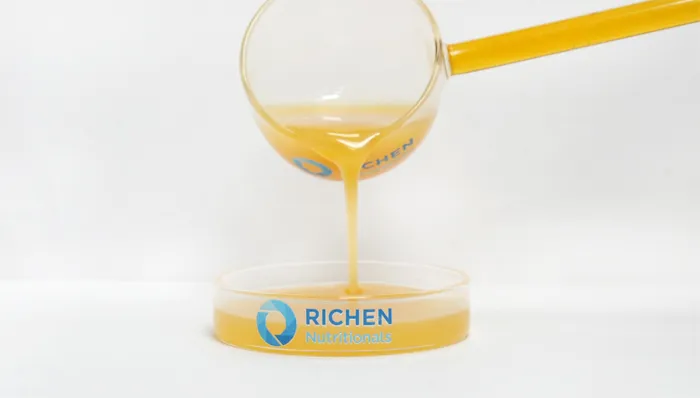
Rimind PS™ Oil-Dispersible Powder offers strong application performance. After shear processing in vegetable-oil systems such as soybean oil and MCT oil, it provides good flowability and low viscosity, with no agglomeration, sedimentation, or phase separation. This makes it well suited to the manufacturing and long-term storage of softgels, oil-based beverages, and other oil-based products.
2. Consistent Quality, Easier Processing
When Rimind PS™ Oil-Dispersible Powder is used in oil-based dosage forms such as softgels, no additional 100-mesh milling or sieving is required, helping avoid increases in PS peroxide value caused by prolonged grinding. During production, the powder can rapidly and uniformly disperse in vegetable oil after shear processing, eliminating the need for repeated colloid milling or ball milling. This helps improve production efficiency while reducing the risk of peroxide-value elevation.
3. Customizable PS Content, Better Cost Efficiency
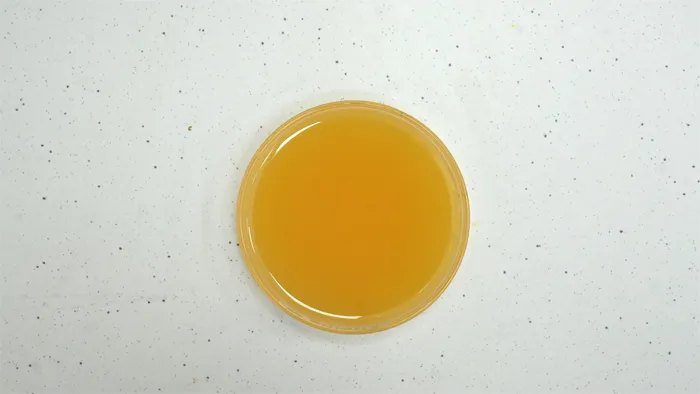
Rimind PS™ Oil-Dispersible Powder is available in 50%, 60%, and 70% specifications to support diverse requirements across domestic and international markets. Compared with conventional low-potency 20% PS oil preparations, Rimind PS™ Oil-Dispersible Powder offers greater cost efficiency.

Delivering Consumer Value, Empowering Finished-Product Brands
Phosphatidylserine (PS) is a major acidic phospholipid in human cell membranes, accounting for 2%–20% of the total phospholipid mass in adult plasma and intracellular membranes.[1][2][3]
Exogenous PS can be absorbed and cross the blood–brain barrier, increasing PS availability in the brain and promoting its incorporation into neuronal cell membranes. It may help slow, prevent, or reverse age-related biochemical changes and structural degeneration in the human brain, thereby supporting cognitive functions such as memory, learning, and attention.[4] The Korea Food and Drug Administration (KFDA) has approved a health claim related to “improving cognitive function that declines with aging” at a daily intake of 300 mg.[5]
Compared with conventional PS products, oil-based systems formulated with Rimind PS™ Oil-Dispersible Powder offer lower viscosity and better flowability, helping address the application challenges and storage-related phase separation often associated with traditional PS. Brands can leverage this purpose-built upgraded ingredient to develop premium, high-quality, and stable brain-health products with stronger differentiation.
Multiple Specifications for Diverse Dosage Forms, Covering a Broad Range of Formulation Needs
As the lead drafting organization for the phosphatidylserine industry standard QB/T 5821-2023, Richen Nutritionals provides three Rimind PS™ 50 formats for different dosage-form applications: powder, granules, and oil-dispersible powder. The portfolio covers tablets, hard capsules, solid beverages, softgels, oil-based beverages, gummies, and more, providing one-stop support for formulation development and commercial-scale manufacturing across dosage forms and application scenarios.

The new Rimind PS™ Oil-Dispersible Powder directly addresses key challenges in premium oil-based formulations. Through targeted technical upgrades, it supports product advancement and helps functional food brands develop high-quality, differentiated brain-health products for the RMB 100-billion-plus brain-health market.
[1] van Meer G, Voelker DR, Feigenson GW. Membrane lipids: where they are and how they behave. Nat Rev Mol Cell Biol, 2008;9:112-24.
[2] Kobayashi T, Beucha ME, Chevallier J, Makino A, Mayran N, Escola JM, et al. Separation and characterization of late endosomal membrane domains. J Biol Chem, 2002;277:32157-64.
[3] Conetio 3G, Grogan WM, Phamy RK. Lipids of human epididymis removed at orchiectomy. J Reprod Fert, 1974;41:67-73.
[4]Glade MJ, Smith K. Phosphatidylserine and the human brain. Nutrition, 2015;31(6):781-6.
[5]Schreiber S, et al. An open trial of plant-source derived phosphatydilserine for treatment of age-related cognitive decline.Isr J Psychiatry Relat Sci. 2000;37(4):302-307.
This is the first one.
Richen's Nutritional Ingredients
Ask for Sample
Explore Nutrition Solutions with us!